Augusta Sign Company

Refresh your image today!

  • Contact us
  • About the Company
  • Services
  • Blog

The Tools of My Trade

August 17, 2022 By Mark Hackley

ONE MAN-THREE MAIN FUNCTIONS

Different professions use different tools to get the job done. Since I am involved in all the day-to-day operations of a one-man sign shop, I need to be familiar with a variety of tools to do my job well. I guess, if I wanted to break it down into three important facets, my job is first marketing, sales and administration; then comes design; and last is production and installation.

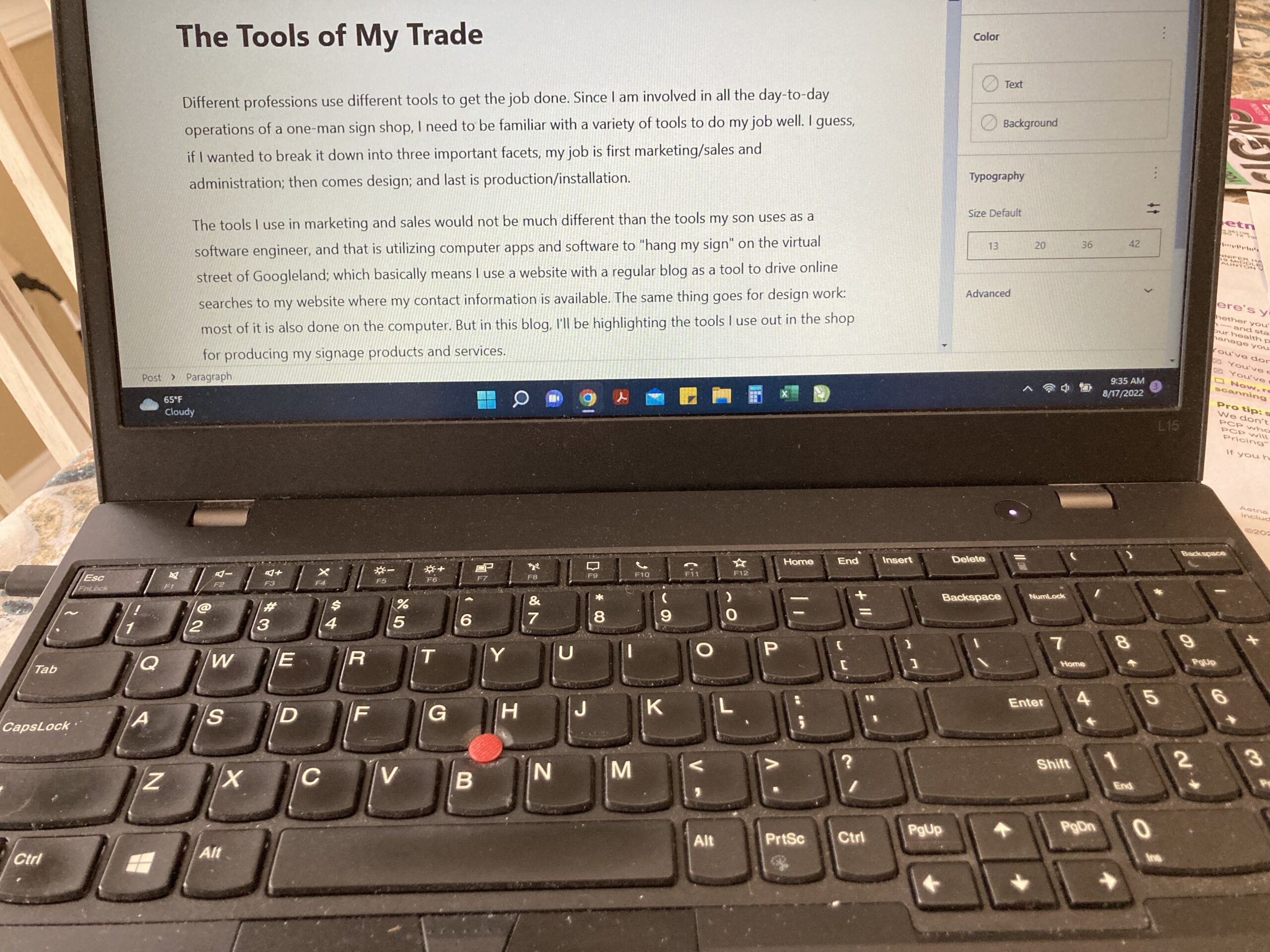
I spend at least 3 days per week in front of my laptop, where all design and sales is done…no wonder I wear trifocals! Oh well, it gives me a good excuse to miss putts out on the golfcourse!

The tools I use in marketing and sales would not be much different than the tools my son uses as a software engineer, and that is utilizing computer apps and software to “hang my sign” on the virtual street of Googleland; which basically means I use a website with a regular blog as a tool to drive online searches to my website where my contact information is available. The same thing goes for design work: most of it is also done on the computer. But in this blog, I’ll be highlighting the tools I use out in the shop for producing my signage products and services.

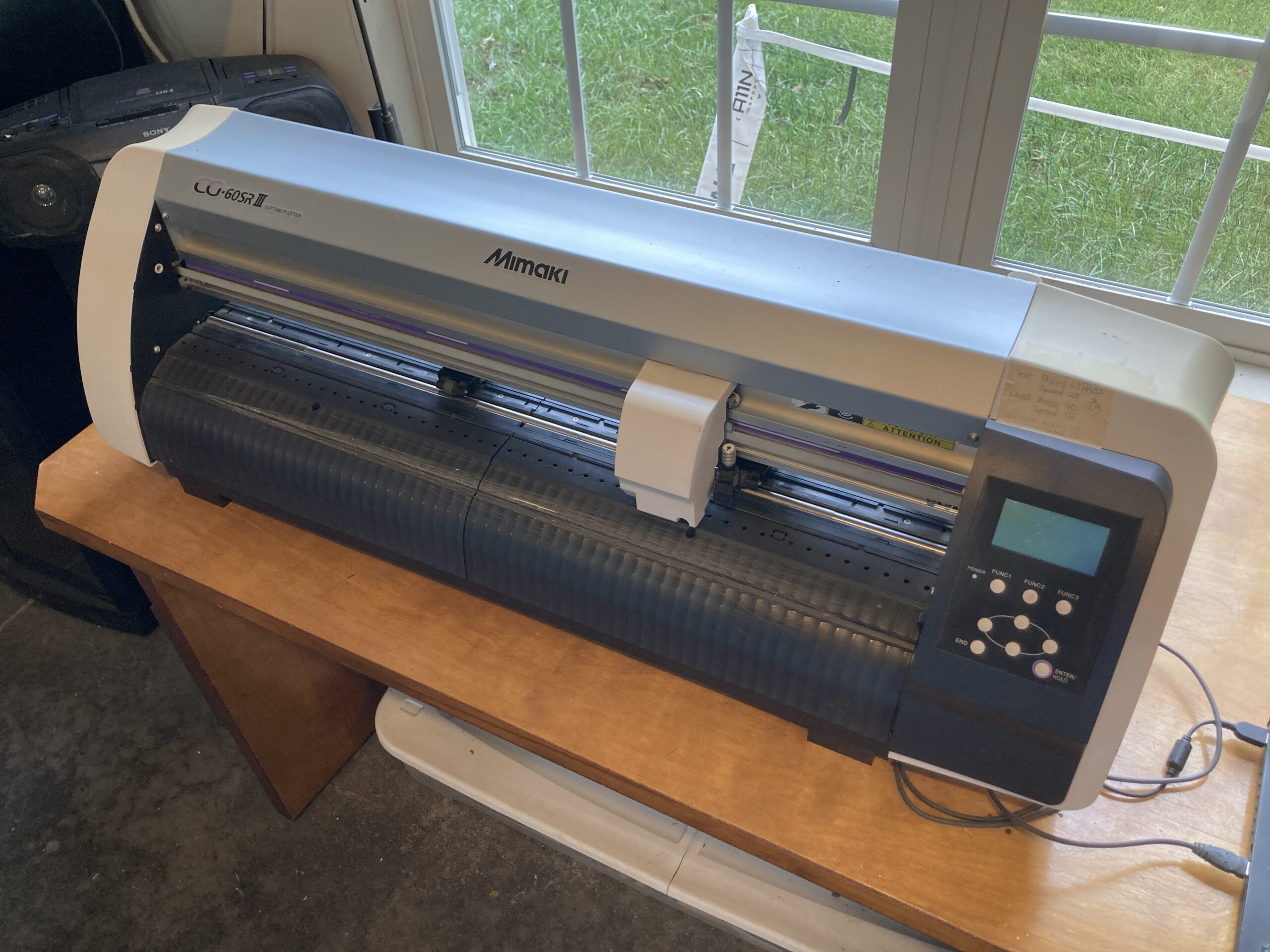
Back in the day I used to sell these Mimaki plotters and printers for Tubelite out of the Charlotte, NC branch. When I went back into business in 2015, I purchased one from the company I sold for. They are now called TubeliteDenco.

OUTSOURCING IS MY FRIEND

Since I am a one man shop, I depend on one or two key suppliers for my sign panels, and ones that can provide custom cutting of the panels if needed when things get busy. Most panels nowdays are pre-finished, meaning there is not much shop painting needed unless I am working on a cedar sign project, where I would order raw cedar boards. About 90% of the panels will be finished with digitally printed films that are outsourced; the other 10% will get cut vinyl graphics that I prepare in the shop using a 30″ plotter. I can cut my own vinyl films and make paper patterns and stencils using this important tool.

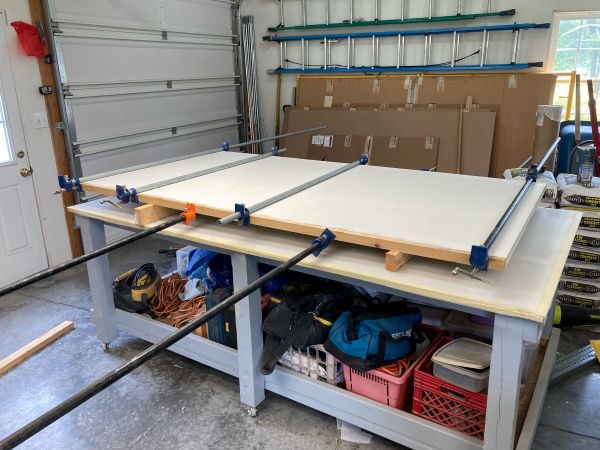
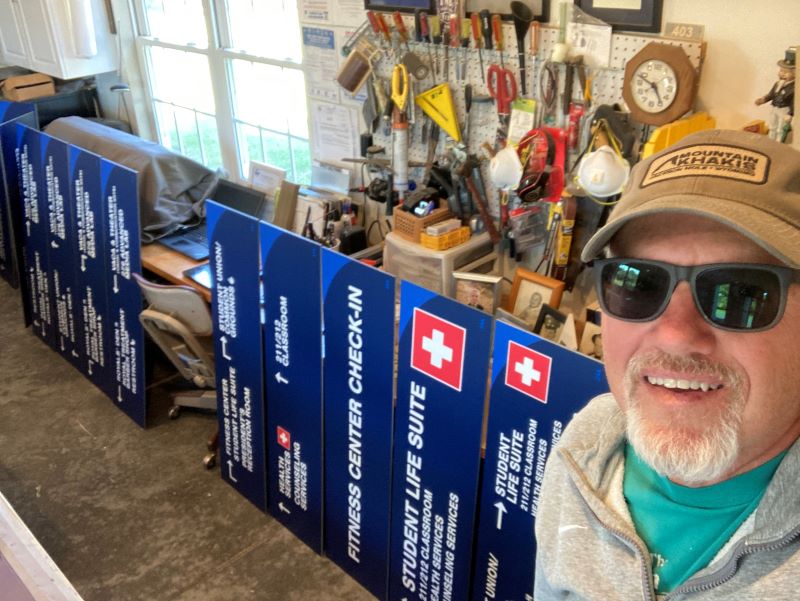
A random assortment of tools left on the worktable today out in the shop…

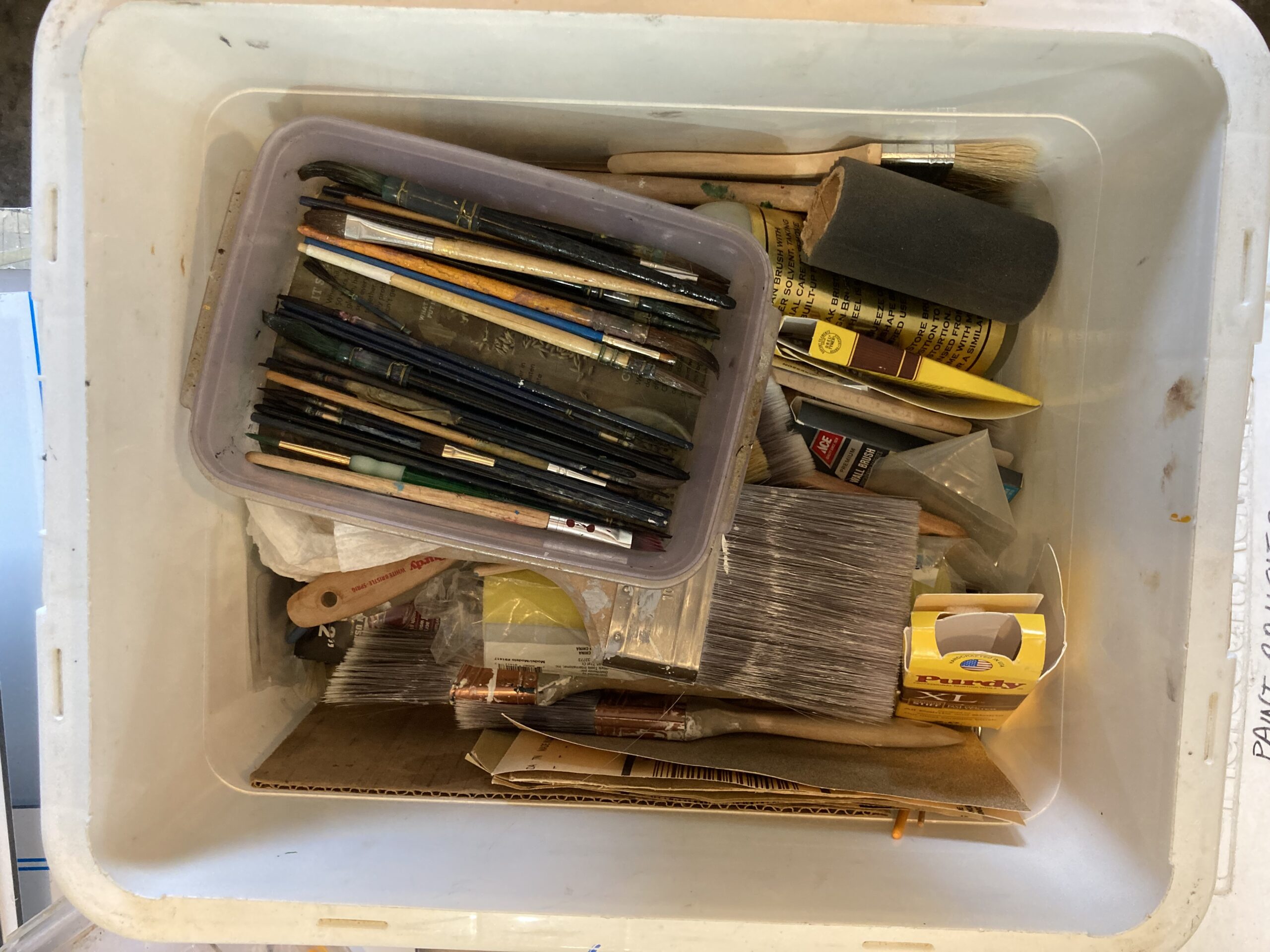
Since a third of my time is spent in sales and marketing, and another third in design, that only leaves a day or two out in the shop each week. That means I have to be efficient out there to get things done. The process most performed in my shop is installing graphics on ready-to-letter panels. For this process I use a variety of squeegies. I use felt squeegies to apply printed vinyl and hard plastic squeegies to apply cut vinyl letters and logos. I also use application fluids, precision blades, and various tapes during the graphic application process. Many times I will have to cut a decorative shape in the panel and sometimes attach removeable panels and things like that, so I have all the basic woodworking and metalworking tools that you’d expect to find out in the shop for those kinds of things. On occasion, I get the chance to handpaint a sign, and I have a slew of brushes and other tools for handpainting signs, which I learned to do in the early 1980’s.

I learned to paint signs back in the days when we were actually called “signpainters”!
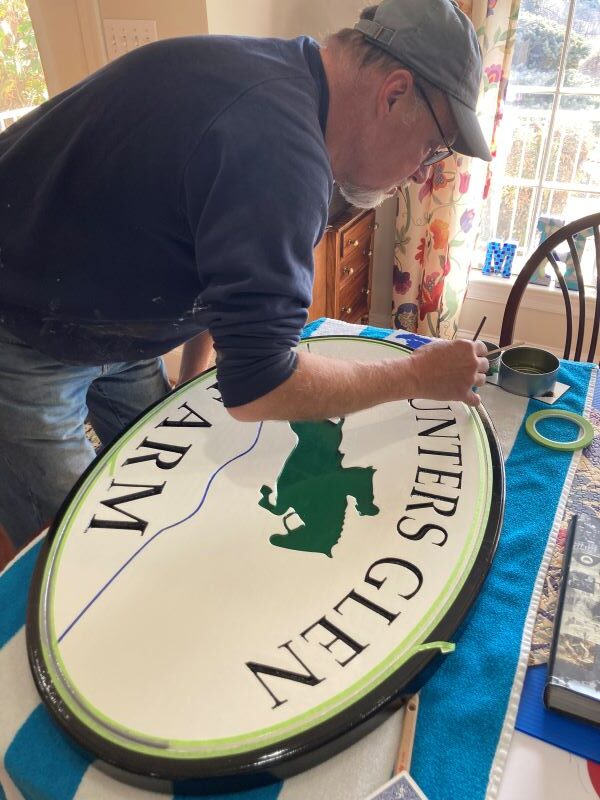
Here is a shot of some brushes I still get to use on occasion…

SELECTIVE INSTALLATIONS

As a one-man shop perhaps the most difficult task I have is installation of signs. I will not take on a job if it involves a difficult installation unless the customer takes care of that part. I do have a nice set of scaffolding, a very nice set of ladders and a crosswalk, digging tools, and other tools for signage installation, but as I get older, I limit myself to what I can actually do these days. I like to recommend other sign shops I am familiar with for the things I cannot tackle or at least feel uncomfortable trying to even consider.

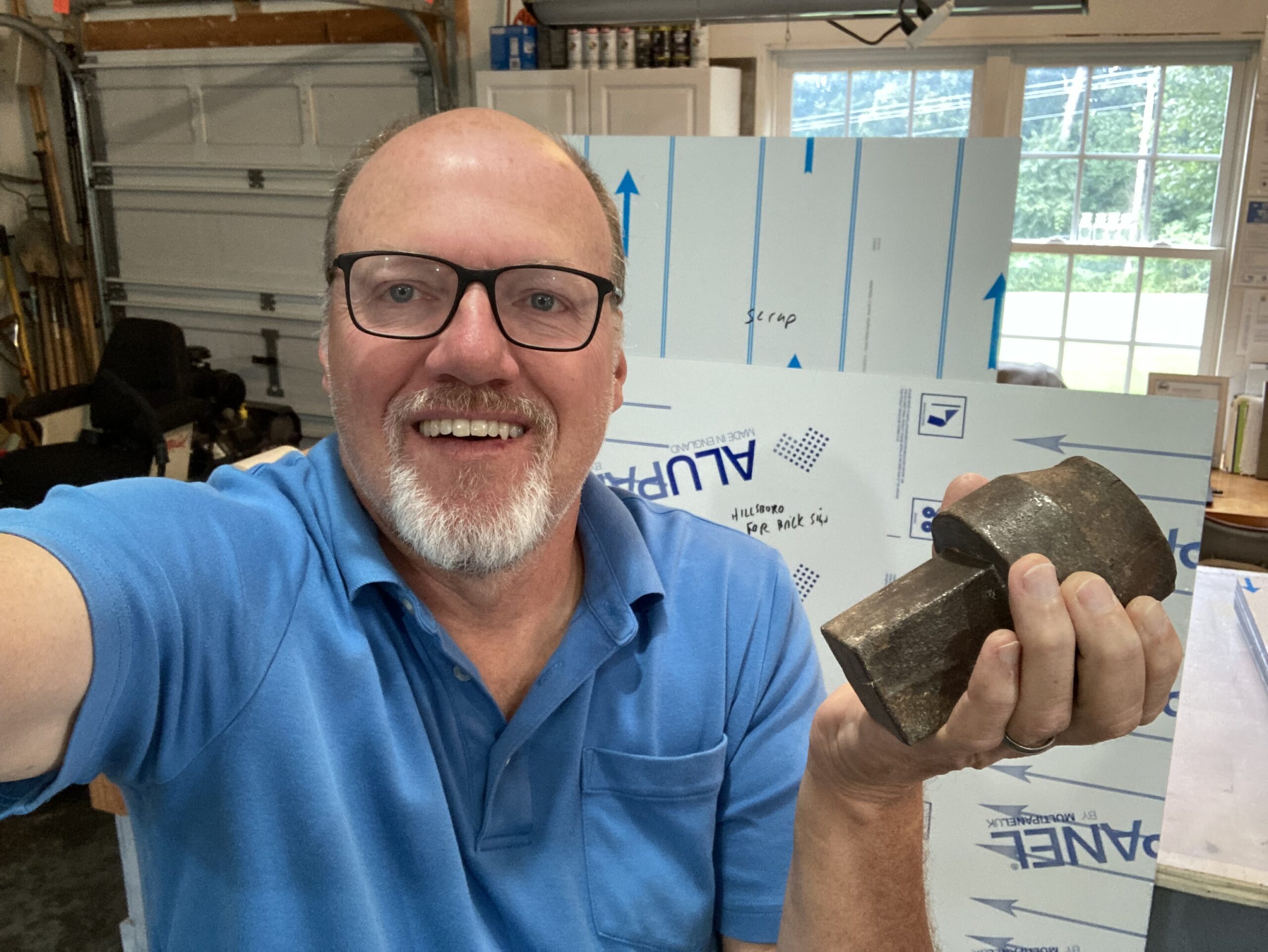
Me, holding a heavy steel “drive cap” used in driving steel posts in the ground.
I purchased a slew of post driving tools for my Blue Ridge Tunnel Project back in 2020.
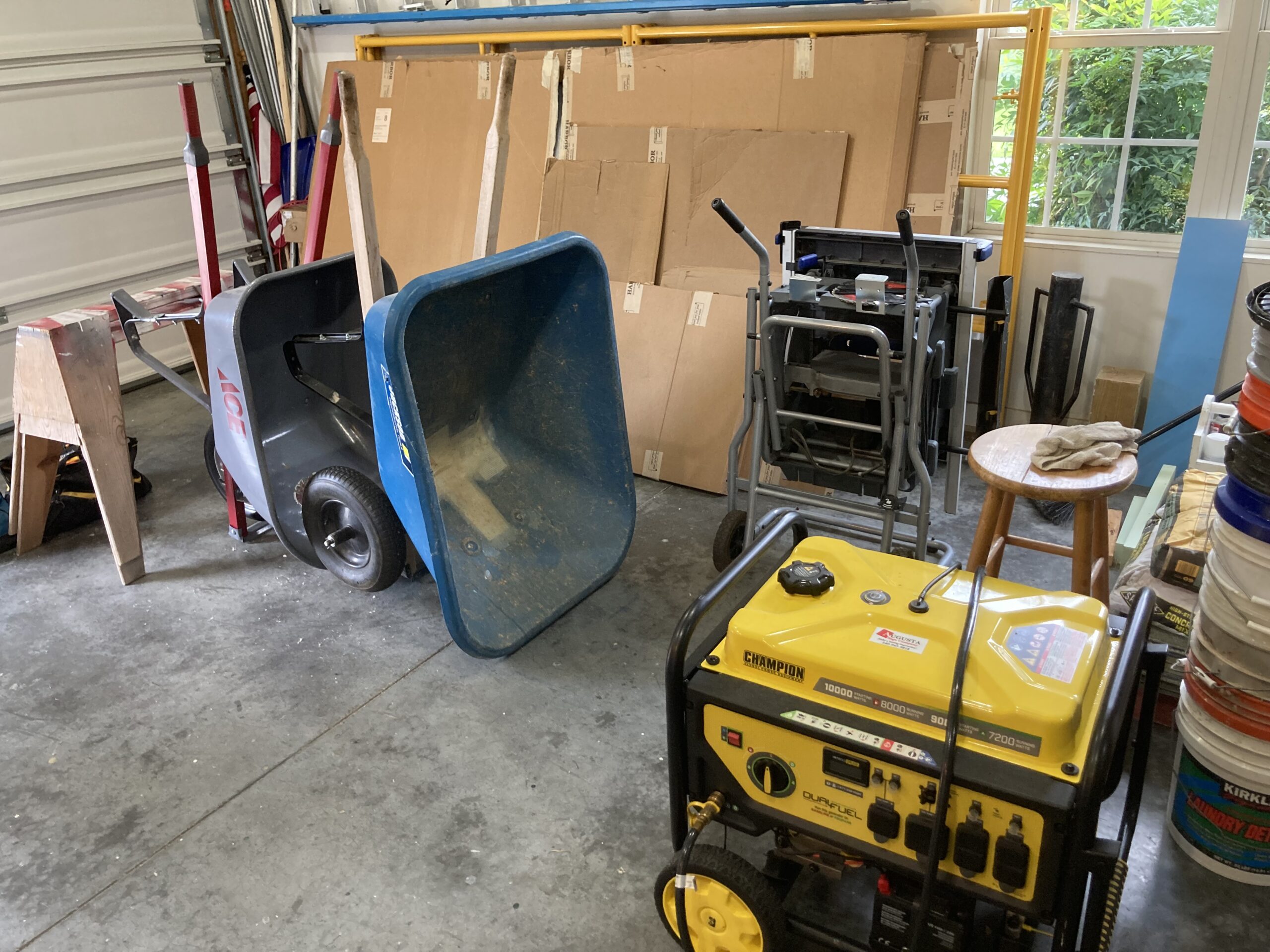
A view of various tools out in one part of my workshop today…

Mark Hackley owns and operates his small business, Augusta Sign Company, near Staunton, VA.

540-943-9818

Filed Under: Sign Knowledge Tagged With: Tools of the trade-signs

Keeping Up With The Joneses

June 24, 2022 By Mark Hackley

Plastic wall letters have always been a great product for me to use for customers seeking a clean, durable brand. For red brick backgrounds, white plastic wall letters make a great choice. This particular customer wanted to add a new partner’s name to the existing name on the wall. I met with the owners to survey the area of the signage and what would have to happen to accomodate the additional letters. They wanted to keep the same letter height, typeface, and color scheme. The only difference would be to use durable 1/2″ thick acrylic versus the existing cut-out and painted plywood letters that they had used for decades.

Sometimes I refer to plastic wall letters as FCO letters, which stands for “flat-cut-out”. There are many ways to make wall letters. Plastic wall letters can be cut from flat stock or they can also be formed in a vacuum forming process using molds. Cutting the plastic letters from flat stock is done by a CNC router. Each letter is cut and then threaded holes are drilled in the backs to accept aluminum or stainless steel studs that hold the letters onto the wall.

The labor hours involved to install plastic wall letters is determined by the wall material: brick taking the longest, gyp board probably the shortest. Once the customer approves the final design, the letters are ordered. After a normal 4-8 week period, the letters arrive at my shop from the manufacturer along with a computer-generated pattern that I use to mount the individual letters on the wall. I arrive early on the site, set up my walkboard and proceed to layout the drill pattern. I find the center of the wall area and, after rolling the pattern like a scroll from each end, I tape the center at the marked centerline. Then I unroll each side, taping it down as needed with high-tack duct tape. Once the pattern is double-checked for center, baseline height, and level, I use a wall punch to make dimples in the brick at each stud location. Then I drill a 3/16″ hole into every marked stud hole, coming back with a 1/4″ drill bill to accomodate the 3/16″ studs and silicone adhesive.

Once the holes are drilled, I dry-fit each letter to make sure everything works and each letter fits correctly into the holes. After all letters are dry-fit, I come back one more time and apply a clear adhesive to each stud, fastening each letter in place. It was a hot day to install the letters, but fortunately my helper, Jennifer Hackley, was able to help me complete the final project!!

Mark Hackley owns Augusta Sign Company in Staunton, VA 540-943-9818

Filed Under: Sign Knowledge

How My Sign Company Made The Sign for Horseshoe Hill

March 8, 2022 By Mark Hackley

One afternoon I received a call from a property owner in Keswick, VA wanting a sign for her driveway entrance. After meeting with her at her Charlottesville office I was able to prepare a sign design based on what she had in mind: a small, simple, yet elegant oval sign to greet friends as they entered her property, a beautiful 42 acre lot in the heart of Albemarle horse country.

Finished carved cedar sign in Keswick, Virginia.

Building a wood sign like she had in mind is very motivating for me! Ever since I attended a handcarved sign workshop in Stowe, Vermont back in 1990, I have been interested in all types of handmade wood signs. Then, over time, with the help of computer-aided-design and manufacturing, I became skilled with V-carved and sandblasted lettering techniques. Nowadays, I generally choose western red cedar as the species of wood for sign panels because I’ve gotten to know its track record of carvability and durability over the years; and this is what I selected as the wood for the Horse Shoe Hill sign.

The Horse Shoe Hill sign after it is routed with a CNC machine.

After she ran my preliminary sign design by her architect, who was at that time working on an extensive remodel on the property, she recommended I alter the base of the post by beefing up the scale some versus using a plain 6X6 post column for the sign pole.

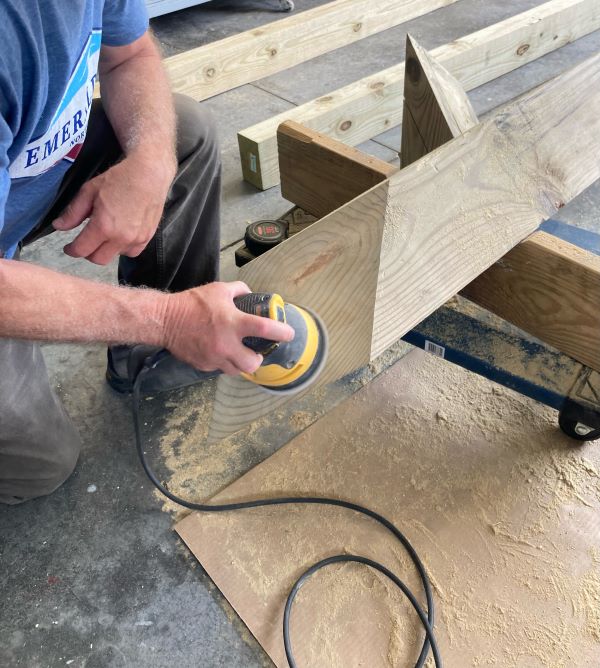
Marshall Carpenter sanding the main part of the post outside the shop in Staunton, VA.

I purchased the cedar panel and had the lettering carved per the approved design drawing. Once that was complete, I routed the edge, sanded the letters, background, and edges, and then primed the surface with two coats of oil-based primer. Once the primer was cured, I applied a heavy coat of hunter green enamel over the entire sign. After a few days of drying, I hit the sign with my pounce powder bag and applied the size for the gold leaf. (The pounce powder prevents the gold from adhering to the fresh enamel background.) After the size set to the proper consistency, I applied the gold leaf. As the sign was drying, I constructed a tall 6X6 post using treated yellow pine. Once that was built I primed and painted the post black and installed a large black iron scroll bracket to the top of the post to hang the finished sign from once installed.

The 23K gold leaf applied to the wet size that was prepared for the V-carved letters.

When both the sign and the post were complete, I arranged a date for installation. The architect took care of permitting and I dug a 42″ deep hole to set the post in concrete. I planted the sign post and attached bracing to the post until the concrete cured, after which I installed the sign using stainless steel hardware, and everything was finished. I see that the $6.95 M property is currently for sale in Albemarle County, VA. If you’re looking for it, just look for the nice 23K gold leaf sign! You can’t miss it.

Owner of Augusta Sign Company, Mark Hackley, with a million dollar smile, as he completes the sign for property worth millions! (But since he’s heard the streets of Heaven are solid gold, I don’t think that smile will ever fade!)

Mark Hackley owns and operates Augusta Sign Company and serves the Waynesboro-Staunton-Augusta County area of Virginia with hand-fabricated signs of all types…(and he has been since 1990!)

Filed Under: Sign Knowledge Tagged With: Carved Wood Signs, Cedar Signs, Gold Leaf Signs, Wood Signs VA

Custom Estate Signs for $2,000

January 12, 2022 By Mark Hackley

Last fall Augusta Sign Company was contracted to make a low profile entrance sign for a home in historic Rockbridge County, Virginia. The customer wanted a carved wood sign. He had found us on a Google search and liked a few of the black and white carved cedar signs we had manufactured for other customers, so we agreed on a design and the cost came to about $2,000.

I found the customer had a similar living situation as my family, where two families are sharing the same house. In their case, a mother/mother-in-law resided with them, in ours its a father/father-in-law situation. The customer recently built a new home and the customer’s mom dreamed of having a nice entry sign with the name of the property and address. These signs are very commonplace and popular here in Virginia, and I remember reading a magazine article decades ago that you can actually increase the value of your country property by giving it a name! After learning about his mother’s sign idea, my customer was excited about getting the new sign up by Christmas.

A carved or sandblasted wood sign generally takes approximately 6-8 weeks to complete, especially if there are posts and installation involved like in this particular case. After receiving a deposit and final proof approval, I ordered a cedar blank and cut the outside shape with a jig saw, and had the V-carved letters cut on both sides with a CNC router. The next step was to thoroughly sand the panel, ease over the outside edges of the sign and then prime with a stain-killing exterior oil-based primer. Once the primer was dry, I chose to use an oil-base sign enamel for the background finish and then lettered the recessed lettering with a squirrel-hair lettering quill and black lettering enamel.

The customer liked the look of an iron scroll bracket, so I ordered a standard black 36″ wide bracket which conformed well to the 30″ wide wood sign that would hang below. I inserted 2 stainless steel eye bolts and epoxied them into the cedar. I fastened the scroll bracket to the custom 4X4 post I made. The custom post was adorned with a nice CNC-turned cedar ball finial at the top and included a build-out portion at the bottom to give it more meat at the base.

After having the underground utilities marked, I dug a 42″ deep hole and planted the sign post in 800 pounds of concrete to keep it plumb. The rural area gets lots of wind so I wanted to make sure the sign and post could endure years of harsh environmental treatment. The cedar wood should last a lifetime, but will need maintenance to keep it looking like new every 5-10 years or so. The treated post should last at least 30 years and probably more, and the iron bracket and stainless steel hardware should easily last a lifetime.

My customer was very happy to see the sign installed by Christmas and I am sure his mom was too!

If you are interested in having a custom carved cedar sign designed and fabricated for your home or business, please contact Mark Hackley at 540-943-9818, or e-mail him at mark@augustasigncompany.com.

    Filed Under: Sign Knowledge Tagged With: Virginia, Wood Signs

    Even the Animals Like Our Work!

    January 11, 2022 By Mark Hackley

    Animal Instincts

    As I was putting the finishing touhes on signage for a new animal hospital in Waynesboro several years ago, a little Terrier-type dog stopped over to wag his tail for me. To me, that was an indication that even the animal kingdom appreciates my work! Or maybe I was over-reading the friendly wag and getting a false notion that she was wagging at the new signs going up; Maybe it was just a great new spot to sniff around!

    The new building during the construction phase.

    In summary, here is the way my company handled a neat sign project for the Waynesboro Animal Hospital in Waynesboro, VA: I initially got a call from the owners of the veterinary practice who were constructing a new animal hospital and they needed signage. Their archictect/GC partner had planned out where the signage would go and pulled the applicable sign permits required for the project. They just needed me to provide the lettering and installation for the signs. One would be located at the stucco wall over the entrance door; and another would be a 2-sided free-standing sign out on the main road at the edge of their nice, new parking lot.

    The monument sign before receiving the EIFS finish and lettering.

    After discussing several material options, they chose flat-cut-out acrylic (FCO). I designed the sign graphics to fit the applicable spaces, got customer-approval, and ordered the lettering. It took about 3-4 weeks to get all the lettering completed, and it was perfectly coordinated with the contractor’s crew who built the free-standing sign monument.

    The front facade after the FCO letters were in place.

    The stucco was barely dry when the lettering arrived, and it was time for the installation. I used scaffolding to install the wall letters in the morning, and then spent the afternoon installing the monument letters. The monument also displayed the hospital’s logo and logos of an affiliate organization that was important for customers to know about. For these, I used FCO and applied 3M digital prints to the outer surface. All the lettering was blind-stud-mounted. I made a pattern of where the holes would go and then inserted the studs on the backs of the letters into the holes and cemented them in with a special adhesive product.

    The Finished Road Sign.

    Another Successful Sign Job

    All in all it was a smooth project. I met with the customer prior to nailing down a final color for the letters to make sure he had the color plus the visibility he was desiring for the job. This involved bringing several samples of various colors. The final color choice was not just a random selection. I like to think of it as a pre-engineered choice! Maybe that was the reason for the wag…perhaps that Terrier was owned by a Virginia Tech engineering student! I think I do remember noticing a slide rule clipped to her collar.

    Mark Hackley is President of Augusta Sign Company, Staunton, Virginia. Contact: 540-943-9818; mark@augustasigncompany.com

    Filed Under: News and Updates

    • « Previous Page
    • 1
    • 2
    • 3
    • 4
    • 5
    • 6
    • …
    • 20
    • Next Page »

    Copyright © 2016 · Augusta Sign Company · Log in